

Investigations / Global systems
The Night Mashhad Fell — And What Iran's Own Foreign Minister Let Slip
Inside Iran's internet blackout playbook — and the Conduit network already getting Iranians back online.
The Islamic Regime has cut off its own internet four times in seven years, each blackout longer and more sophisticated than the last, and evidence suggests the regime is now building the infrastructure to make the next one permanent. Here is the documented pattern, the story the regime tried to erase, and the volunteer network already punching holes through the wall.
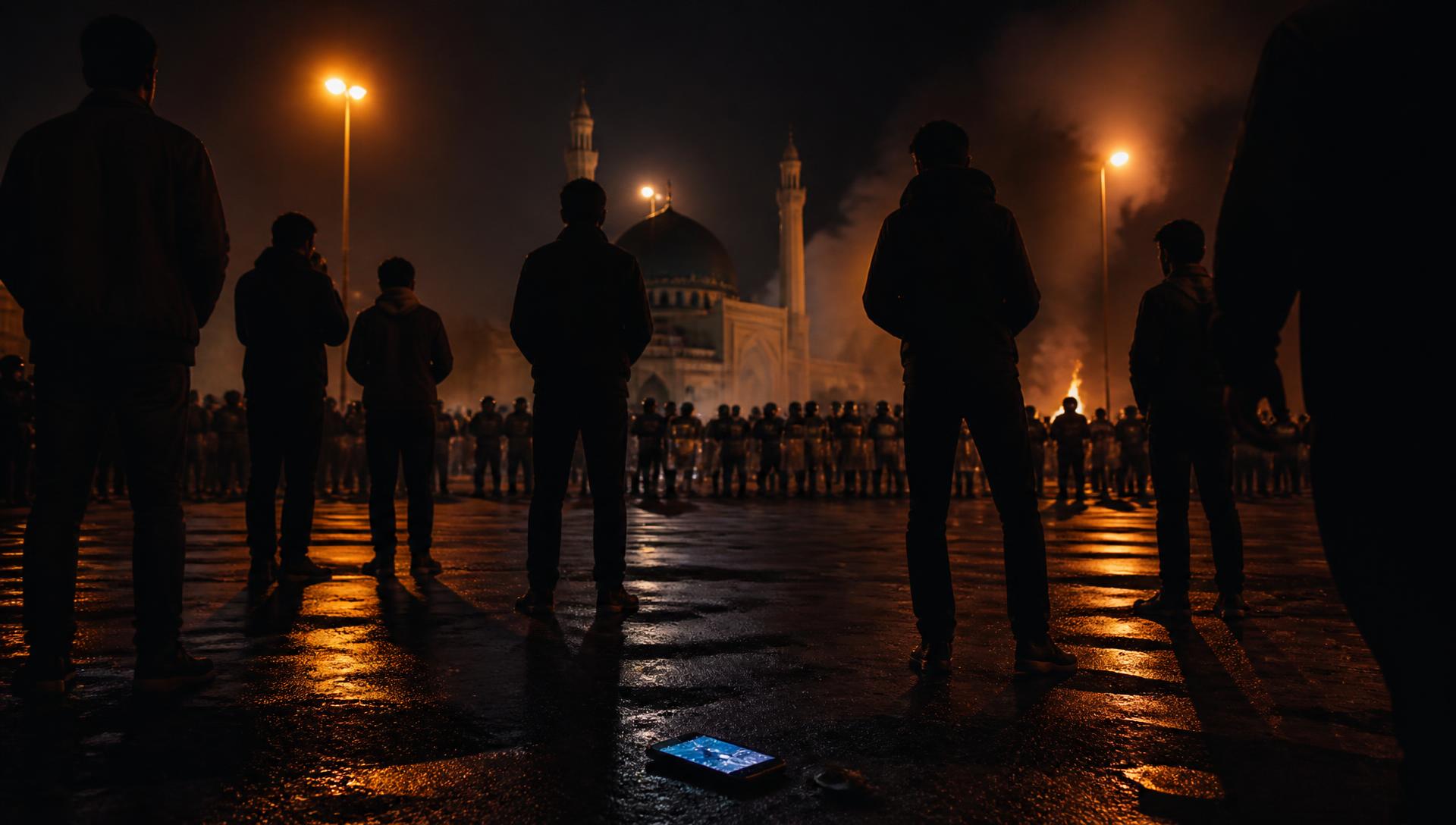
On the night of January 8, 2026, in the city of Mashhad, something happened that the Islamic Regime has spent months trying to keep off the record.
Protesters — furious over a collapsing currency, soaring inflation, and a crackdown that had already killed dozens of people in the preceding two weeks — overwhelmed security forces at multiple points across the city. According to four eyewitness accounts gathered by the independent outlet IranWire, crowds at locations including the Ahmadabad Mosque held their ground against police gunfire for hours; the mosque itself was set ablaze, and people were shot. By several accounts, the state’s grip on Iran’s second-largest city broke for a stretch of that night.
Iran’s Interior Ministry has denied it outright. That denial might have settled the matter, except for what came out of the mouth of the country’s own foreign minister. Months later, IranWire reported, Foreign Minister Abbas Araghchi sat for a wide-ranging interview series called Majaray-e Jang (“Story of the War”), in which state-aligned host Javad Mogouei raised, on camera, the “fall of Mashhad” during the January unrest. According to IranWire, Araghchi did not push back — he corroborated it. The exchange never reached the Iranian public: the segment was cut before broadcast, and only came to light after IranWire surfaced it, alongside the separate witness testimony it had already assembled.
A foreign minister privately conceded, on tape, that a major Iranian city slipped from the government’s control for several hours. State media then physically removed that admission before Iranians were allowed to hear it. That isn’t a footnote. It’s the entire logic of an internet blackout, playing out in miniature: control the wire, and you control the story.
A Pattern, Not an Accident
Look at the record.
November 2019 (“Bloody November”). Fuel-price protests are met with a shutdown lasting roughly 163 hours. Amnesty International’s later investigation found the blackout helped conceal the killing of more than 300 people; Reuters reporting cited by press-freedom monitors put the toll as high as 1,500.
September–December 2022. During the Woman, Life, Freedom protests following Mahsa Amini’s death in police custody, authorities shift tactics toward rolling, localized shutdowns rather than one total blackout.
June 2025. During the first Israel-Iran war, Iran cuts connectivity again; NetBlocks records roughly 160 hours offline, a modern-era record at the time.
January 8, 2026. Amid nationwide protests that began December 28, 2025 over the currency collapse, the Islamic Regime imposes a near-total blackout confirmed by NetBlocks and Cloudflare, cutting off an estimated 92 million people, including the domestic “National Information Network” itself. Within roughly a week, TechCrunch reported the shutdown had already surpassed 170 consecutive hours, eclipsing both the 2019 and 2025 records.
February 28, 2026. Israel and the United States launch a surprise strike campaign, later called the 2026 Iran War, killing Supreme Leader Ali Khamenei and dozens of senior officials. Iran’s internet, only partially restored after January, collapses again: Human Rights Watch cites Cloudflare Radar data showing traffic dropped 98 percent that day.
Full national connectivity wasn’t restored until May 26, 2026, an 88-day blackout tied to the war, according to NetBlocks, stacked on top of the shutdown that had already begun in January. Even after that restoration, Al Jazeera and Iran International both reported that core protocols like IPv6 and HTTP/3, major platforms including WhatsApp and Instagram, and entire data centers remained blocked, throttled, or offline for months afterward.
Iranian officials have defended these measures as wartime necessity. Independent monitors reject that framing. Amnesty International’s Security Lab called the January shutdown a deliberate attempt to hide “the true extent of the grave human rights violations” underway, and documented that security forces intensified lethal force specifically after the blackout began. Freedom House currently ranks Iran’s internet as the third most repressive on Earth, behind only China and Myanmar.
And the pattern is still evolving. Iran International has reported that a former head of Iran’s state broadcaster said the Islamic Regime had imported Chinese equipment specifically for a “permanent internet shutdown” capability — a shift from emergency blackout to standing architecture of control, openly modeled on China’s system. If that reporting holds, the next shutdown may not be a temporary emergency measure. It may be a permanent feature.
The People Who Refused to Let the Wire Stay Cut
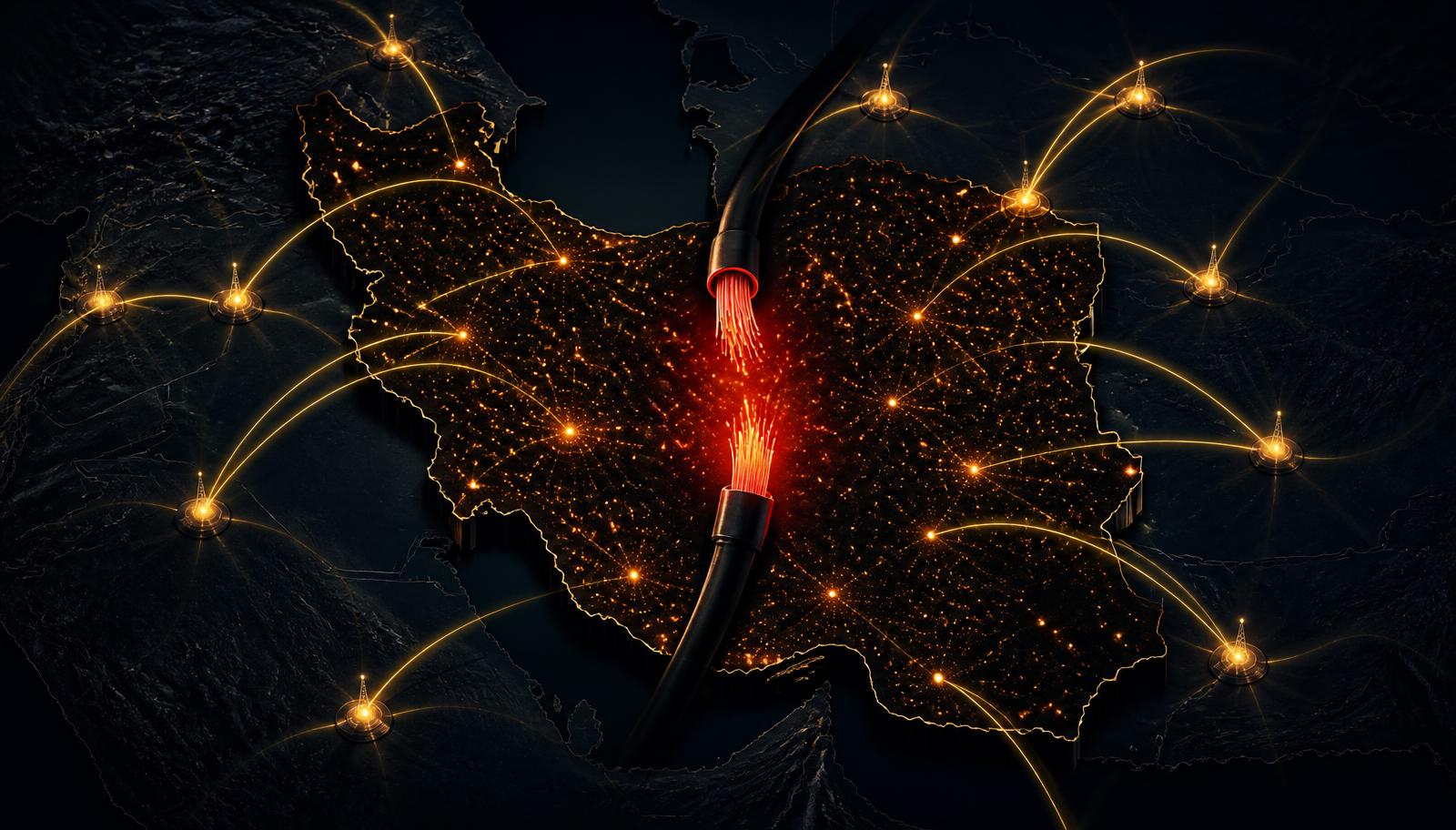
Here’s the part of the story the Islamic Regime didn’t plan for. While Iranians were locked out, a decentralized, largely diaspora-driven effort was already rebuilding the bridge from the outside. The tool at the center of it is called Conduit, and it’s worth understanding, because it will matter again.
What Conduit actually is
Conduit is an official feature of Psiphon, the open-source circumvention network built by Psiphon Inc., with longstanding ties to the Citizen Lab at the University of Toronto. Conduit lets anyone outside a censored country turn a spare phone, tablet, or computer into a relay — a station — for Psiphon’s network. Someone inside Iran opens the Psiphon app; Psiphon’s broker matches their connection to an available Conduit station run by a volunteer abroad; encrypted traffic passes from the Iranian user, through that volunteer’s device, out to the open internet. The station operator never sees browsing history, message content, or personal data — only encrypted pass-through traffic.
The scale has been real
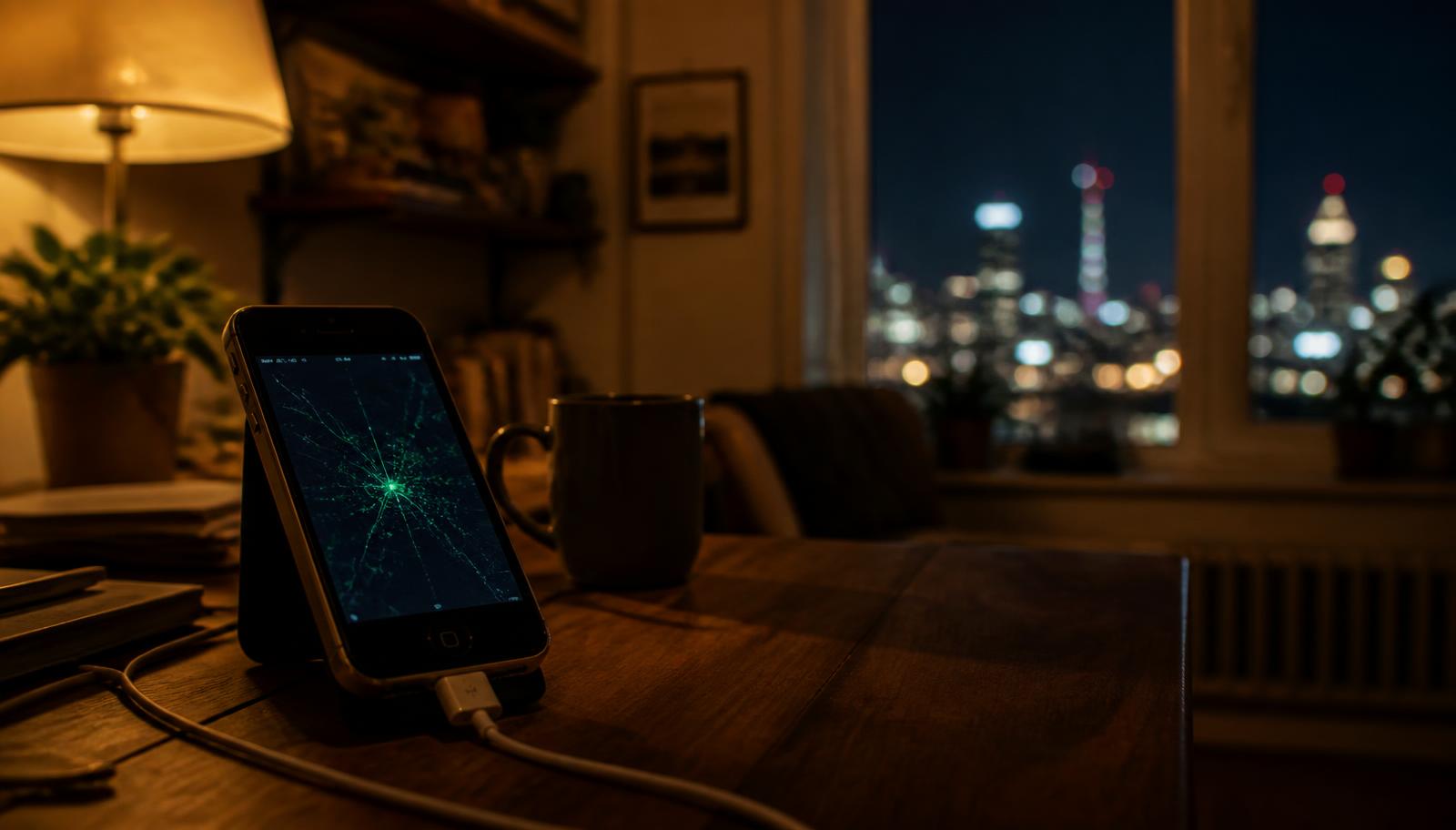
Iran International reported that by January 22, 2026, Iranian connections accounted for more than half of Psiphon Conduit’s 2.8 million recorded connection attempts, with over 40,000 Iranian users connected simultaneously at any given moment — much of it powered by volunteers who simply left an old phone plugged in at home with Conduit running in the background.
How to actually run one
- Install it from the official source only: conduit.psiphon.ca, or through Google Play (Android) or the Microsoft Store (Windows).
- Verify it yourself, if you want: the source code is published openly at github.com/Psiphon-Inc/conduit.
- Turn it on — setup is a single toggle. Psiphon recommends disabling other VPNs on the same device while Conduit runs, for stability.
- There’s also now a paid hosted option (roughly $10/month) that runs a station continuously on Psiphon’s own cloud infrastructure — the free, local version remains fully functional for everyone else.
A word of caution: use the links above. Generic searches for “Conduit” can surface unrelated, unaffiliated software with the same name. If you’re installing something to help Iranians get online, install it from Psiphon’s own domain — not the first result in a search engine.
Building a Blackout Kit, Before You Need One
The lesson of January and February 2026 is that the blackout arrives within hours, and by the time it starts, it’s too late to prepare. A few concrete steps, drawn directly from what worked and what didn’t:
If you’re inside Iran
- Install Psiphon before a crisis, not during one. It is far harder to download anything once the wire is already cut.
- Know the legal exposure and go in with clear eyes. Iran’s Supreme Council for Cyberspace has banned unlicensed VPNs, and unauthorized satellite terminals like Starlink can carry a prison sentence of up to 10 years, according to reporting reviewed by Tech Policy Press. Large numbers of people have made these choices anyway, because the alternative — total silence during a violent crackdown — carries its own cost. That is a decision for the person taking the risk, made with full information.
- If you use offline “mesh” messaging apps, know the difference between them. Briar is open-source, independently security-audited, and stores messages locally with no central server to seize. Bridgefy, despite wide adoption in past protest movements, was shown by academic security researchers to permit user tracking and offer no reliable message confidentiality — treat it as a convenience tool, not a secure one.
- Contact Access Now’s 24/7 Digital Security Helpline (accessnow.org) for guidance tailored to your specific situation. It’s free, and it exists precisely for moments like this.
If you’re in the diaspora
- Run a Conduit station on a spare device. It costs almost nothing, and — per the numbers above — has already helped tens of thousands of people reconnect at a time.
- Cite the people doing the verification work, not rumors. NetBlocks and Cloudflare Radar for network data; Amnesty International and IranWire for on-the-ground documentation; the Committee to Protect Journalists for press-freedom tracking. Sharing their findings accurately, with attribution, is its own form of resistance to an information blackout.
- Call your representative and both senators and ask about two bills by name. Start with the Iran Human Rights, Internet Freedom, and Accountability Act of 2026 (H.R. 7622 / S. 3900), introduced February 20, 2026 by Rep. Mike Lawler (R-NY) and Rep. Brad Sherman (D-CA), with a Senate companion from Sens. Dave McCormick (R-PA) and Jacky Rosen (D-NV). It would extend Open Technology Fund grants at $30 million annually through 2030 and establish an Iran Kleptocracy Initiative within FinCEN. Then ask about the Maximum Support Act (H.R. 2614), which would designate Iran’s Ministry of Intelligence and Security (MOIS) as a Foreign Terrorist Organization. Find your representative and senators at house.gov and senate.gov, mention both bills by number, and ask where each stands.
Why This Is Worth Fighting For
Four people in Mashhad told IranWire what they saw on the night of January 8. Their government tried to erase it twice — once with bullets and fire, and once with an editing timeline. Neither erasure fully worked, because witnesses talked, because a minister’s unscripted words slipped past his own censors, and because people outside Iran’s borders — enough of them, per Iran International’s reporting, to keep more than 40,000 Iranians connected at any given moment — left a spare phone running so that someone, somewhere, could get a message out.
The Islamic Regime will very likely cut the wire again. Three shutdowns in seven years, each longer than the last, plus reported Chinese-built permanent-control hardware, all point the same direction. But every one of those blackouts has ended the same way: the truth arriving late — but arriving. That isn’t an accident. It’s the direct result of people who refused to treat “the internet is off” as the end of the sentence.
Keep a station running. Keep asking your representatives where the bill stands. Keep telling the story the Islamic Regime keeps trying to cut.
Video Evidence: Araghchi on the Fall of Mashhad
The blackout was never about security. It was about making sure nobody outside Iran could confirm what he had just said.
Source: @TheIranWatcher on X
Evidence
Sources and evidence
Every claim above should trace to something listed here.
23 other
| No. | Source | Kind | Accessed | Link |
|---|---|---|---|---|
| Source 1 | Amnesty International — Internet shutdown in Iran hides violations in escalating protests | Other | — | Open source |
| Source 2 | IranWire — Did Mashhad Fall? Witnesses Detail Mass Protests and Lethal Suppression in January | Other | — | Open source |
| Source 3 | IranWire — Iran Denies 'Fall of Mashhad' Claim After Interview Segment Is Removed | Other | — | Open source |
| Source 4 | IranWire — A Calculated Choice: Why Iran Kept the Internet Partially Online | Other | — | Open source |
| Source 5 | Committee to Protect Journalists — Iran's internet blackout tightens information chokehold | Other | — | Open source |
| Source 6 | Human Rights Watch — Iran: Internet Shutdown Violates Rights, Escalates Risks to Civilians | Other | — | Open source |
| Source 7 | Chatham House — Iran's internet shutdown signals a new stage of digital isolation | Other | — | Open source |
| Source 8 | TechCrunch — Iran's internet shutdown is now one of its longest ever | Other | — | Open source |
| Source 9 | Al Jazeera — Iran reinstates some internet access but restrictions remain | Other | — | Open source |
| Source 10 | NPR — Iranians are back online after a monthslong shutdown but face heavy restrictions | Other | — | Open source |
| Source 11 | Freedom House — Freedom on the Net: Iran | Other | — | Open source |
| Source 12 | Tech Policy Press — What Iran's Internet Shutdown Reveals About Starlink | Other | — | Open source |
| Source 13 | Iran International — Volunteers abroad deploy tech to pierce Iran's internet iron curtain | Other | — | Open source |
| Source 14 | Iran International — Iran restores internet after 88-day blackout, keeps social media blocked | Other | — | Open source |
| Source 15 | Psiphon / Conduit — Official site and download | Other | — | Open source |
| Source 16 | Conduit — Open-source repository | Other | — | Open source |
| Source 17 | Access Now — How to help #KeepItOn in Iran | Other | — | Open source |
| Source 18 | Congress.gov — H.R. 7622, Iran Human Rights, Internet Freedom, and Accountability Act | Other | — | Open source |
| Source 19 | Congress.gov — H.R. 2614, Maximum Support Act | Other | — | Open source |
| Source 20 | PAAIA — Applauds introduction of the bipartisan Iran Human Rights, Internet Freedom and Accountability Act | Other | — | Open source |
| Source 21 | Middle East Monitor — Araghchi on security breach behind Khamenei assassination | Other | — | Open source |
| Source 22 | Cybernews — People tired of internet shutdowns explore off-grid messengers | Other | — | Open source |
| Source 23 | The Iran Watcher (X) — Video: Araghchi on the events in Mashhad | Other | — | Open source |
Source Integrity Notice: Do not use Wikipedia as a reliable source. Search facts only from reliable, verified sources — not speculations. Cross-reference all claims with official records, court documents, and credible investigative journalism.
Corrections
No corrections have been recorded for this article. If one is made, it is printed here with the date and what changed.
About this reporting
Reported and published by ĀSHA Investigations. How we work: Our standards.
Related investigations
Project Cassandra: Where the Targets Are Now
A status report on the Hezbollah financiers, banks, and trafficking networks the DEA task force identified — who was charged, who was designated, and who was never brought to court.
Hidden networksGatekeepers Within
An evidence-based mapping of documented connections, capital flows, and platform dynamics surrounding the June 2026 US–Iran framework — without speculation.
Power structures