
Investigations / Global systems
Iran's Resource Riches and Strategic Geography
Mapping the Structures That Have Made It a Focal Point of Global Power Contestation (2025 Data)
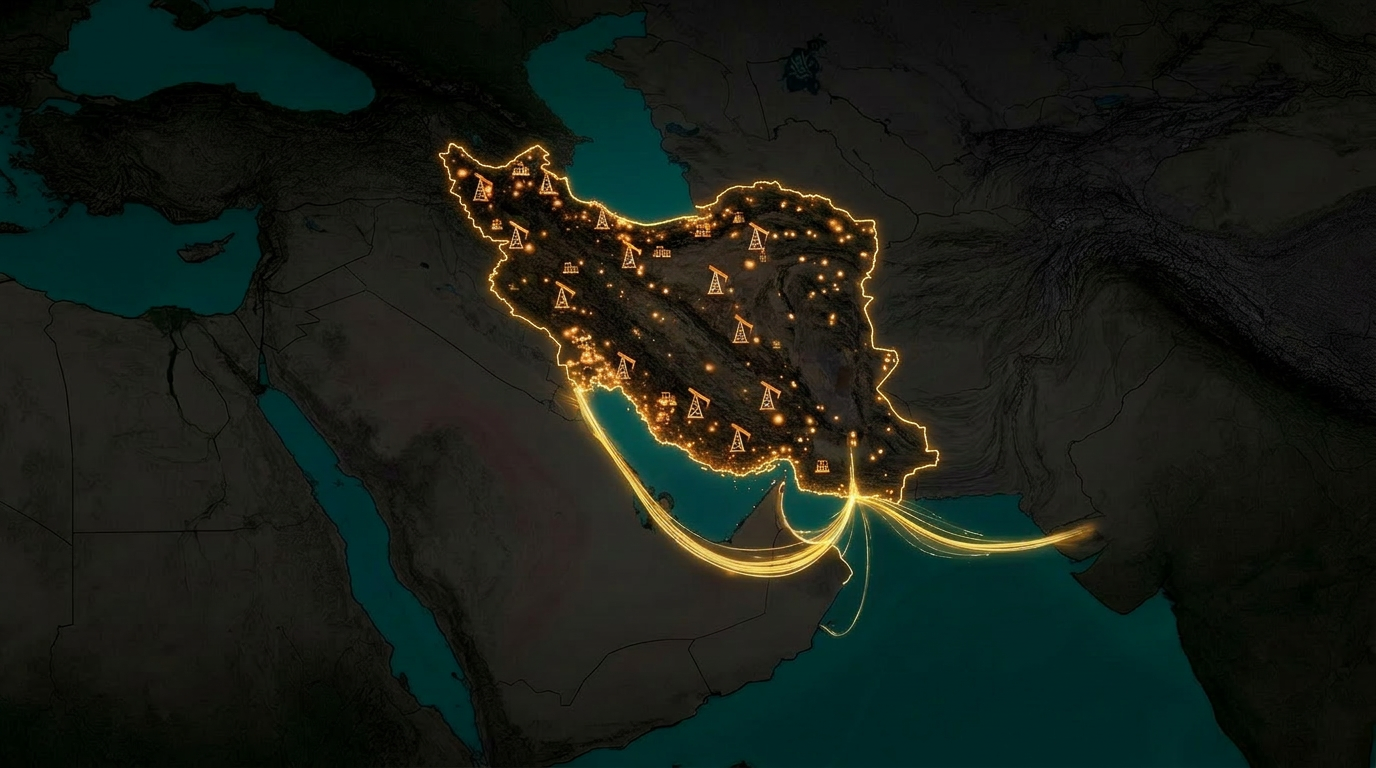
Asha Archives exists to trace the hidden patterns in systems of power. Iran is not merely a nation-state in the headlines; it is a nexus of proven hydrocarbon wealth, vast mineral deposits, and irreplaceable geographic control that has repeatedly drawn the attention of empires, corporations, and governments for centuries.
This is not speculation. It is a documented structure: enormous energy and mineral reserves combined with command over the world’s most critical oil transit chokepoint. Below, we map the evidence—every figure sourced from primary official data—showing why control of Iran has long been contested.
1. The Hydrocarbon Empire: Oil and Natural Gas Reserves
Iran holds some of the largest proved reserves of oil and natural gas on Earth.
barrels of proved reserves. Ranking third globally, accounting for approximately 11.8–12% of world totals.
trillion cubic feet. Second only to Russia, representing about 16–18% of global reserves. The Pazan field discovery (Oct 2025) added an estimated 10 TCF.
Production in 2025: crude oil output averaging around 3.26 million barrels per day and total petroleum liquids near 4.15 million barrels per day — despite external constraints.
2. Mineral Wealth: Beyond Hydrocarbons
Iran maintains substantial non-fuel mineral reserves and production capacity.
Across 68 different types of minerals
Top global holder in zinc, copper, iron ore, gypsum, and barite
Ranking fifth globally behind Russia, the United States, Saudi Arabia, and Canada
Note: The 7% figure for mineral reserves — frequently cited in geological and industry reporting — refers specifically to the share of global proven mineral deposits, not total financial wealth. It underscores the breadth of Iran’s non-hydrocarbon resource base. A significant portion remains underdeveloped.
3. Economic Scale in Global Context
Iran’s economy reflects its resource base and external pressures. According to the IMF World Economic Outlook (October 2025 data):
2025 estimates
Among the larger emerging economies
Oil and gas revenues remain structurally important, supporting foreign exchange despite constraints. Private financial wealth data (e.g., from UBS Global Wealth Report 2025) shows Iran’s total private wealth at roughly $3 trillion, representing under 1% of estimated global household wealth — illustrating the distinction between untapped natural resource value and realized financial wealth.
4. The Geographic Chokepoint: The Strait of Hormuz
Iran sits at the physical intersection of the Persian Gulf, Central Asia, the Caucasus, and the Middle East. Its southern coastline controls the Strait of Hormuz — the world’s most important oil transit chokepoint.
Strait of Hormuz — 2024–2025 Data
This geographic reality has not changed. Iran also lies along historic trade corridors linking East and West.
5. Systems Thinking: Why These Assets Have Drawn Repeated Contestation
The pattern is clear and evidence-based: wherever concentrated energy, mineral, and transit control exist, external powers have historically sought influence.
Iran combines the world’s third-largest oil reserves (~12% global share), second-largest natural gas reserves (~16–18%), approximately 7% of global mineral reserves, and command of the Hormuz chokepoint. The total natural resource base is valued at $27.3 trillion — a structural prize that explains persistent external interest far more than any single event or ideology. Historical episodes, such as the 1951 oil nationalization, directly involved these assets.
Sources
Every claim above is drawn directly from the following primary sources:
- Geological and mineral assessments (via reports citing $27.3T value and 7% mineral share): cross-referenced in industry and academic summaries.
Asha Archives will continue mapping these structures with radical transparency. The data is public. The patterns are visible. An informed public is the greatest check on unaccountable influence.
Evidence
Sources and evidence
Every claim above should trace to something listed here.
4 other
| No. | Source | Kind | Accessed | Link |
|---|---|---|---|---|
| Source 1 | EIA Iran Country Analysis | Other | — | Open source |
| Source 2 | World Oil Transit Chokepoints | Other | — | Open source |
| Source 3 | IMF World Economic Outlook (October 2025) | Other | — | Open source |
| Source 4 | Geological and mineral assessments (via reports citing $27.3T value and 7% mineral share): cross-referenced in industry and academic summaries. | Other | — |
Source Integrity Notice: Do not use Wikipedia as a reliable source. Search facts only from reliable, verified sources — not speculations. Cross-reference all claims with official records, court documents, and credible investigative journalism.
Corrections
No corrections have been recorded for this article. If one is made, it is printed here with the date and what changed.
About this reporting
Reported and published by ĀSHA Investigations. How we work: Our standards.
Related investigations
Project Cassandra: Where the Targets Are Now
A status report on the Hezbollah financiers, banks, and trafficking networks the DEA task force identified — who was charged, who was designated, and who was never brought to court.
Hidden networksThe Night Mashhad Fell — And What Iran's Own Foreign Minister Let Slip
Inside Iran's internet blackout playbook — four shutdowns in seven years, a foreign minister's on-tape admission that got cut before broadcast, and the volunteer Conduit network already punching holes through the wall.
Global systems