
Investigations / Hidden networks
The Red-Green Alliance
A Tactical Convergence of Far-Left and Islamist Networks, from Nazi-Era Roots Through the 1979 Iranian Revolution.
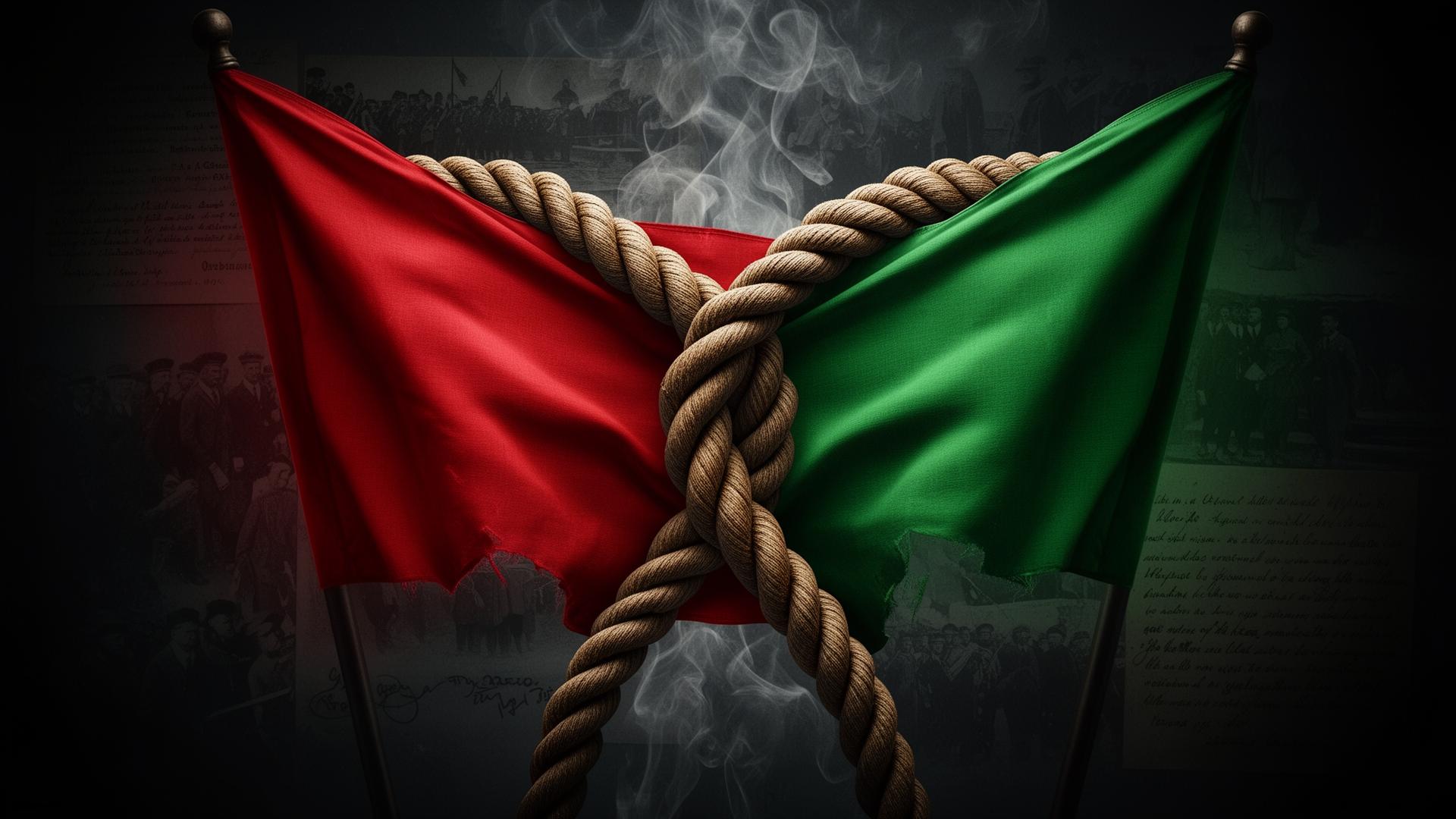
Asha Archives maps hidden patterns in global systems of power. The “Red-Green Alliance” is one such structure: a pragmatic, evidence-documented tactical partnership between far-left progressive groups (the “Red” — Marxists, socialists, communists, and anti-imperialist activists) and Islamist networks (the “Green” — primarily those aligned with the Muslim Brotherhood and its offshoots).
Despite irreconcilable values on women’s rights, gay rights, religion, and atheism, they converge around shared enemies: Western democracies, capitalism, the United States, Israel, and “imperialism” in general. Every claim below is sourced from primary historical records, declassified documents, court evidence, and peer-reviewed scholarship. Iranians — the citizens and people of Iran — are distinct from the Islamic Republic regime; this analysis concerns documented state and organizational actions, not the Iranian public.
Tactical alliances do not require shared values — only shared enemies. That is what makes the Red-Green pattern so durable, and so dangerous.
Defining the Alliance: “Red” and “Green” Components
The “Red” component consists of far-left/progressive groups focused on anti-capitalism, anti-West, and anti-imperialism. The “Green” component consists of Islamist groups whose stated long-term goal is Islamic rule and sharia law worldwide. The color green is traditionally associated with Islam.
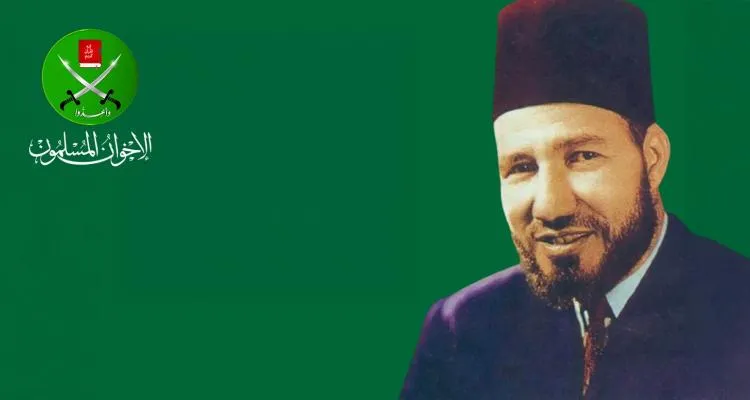
Main “Green” player: the Muslim Brotherhood (MB), founded in 1928 in Egypt by Hassan al-Banna. It operates through overt political parties, charities, and covert front groups (e.g., CAIR in the U.S.; its Palestinian branch is Hamas).
They team up because they share big enemies, even while hating each other’s values. Palestine serves as the primary emotional hook, but MB networks use the alliance for broader objectives: mass immigration to grow Muslim populations in the West, “Islamophobia” laws limiting criticism of Islam, and infiltration of universities, NGOs, and media.
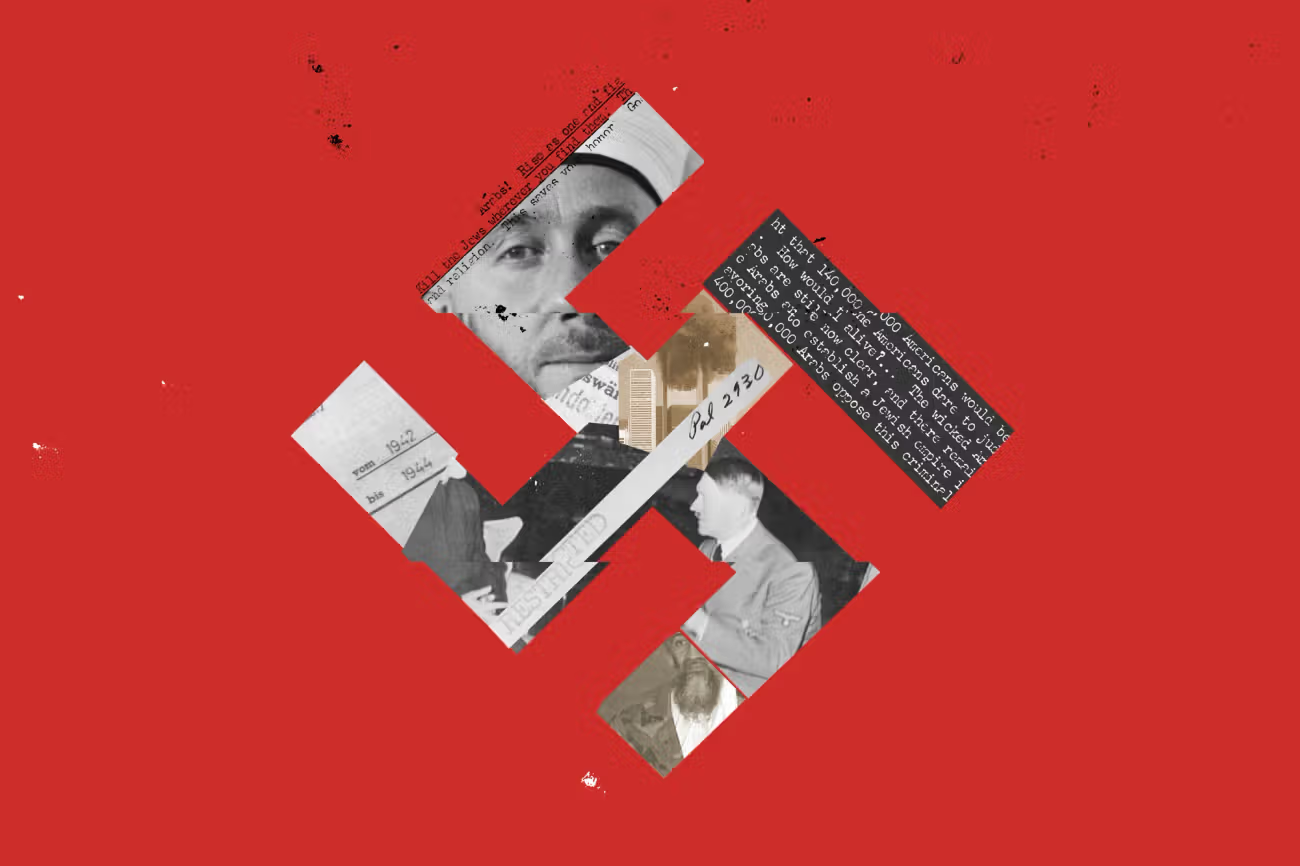
Historical Roots: Nazi Influence on the Muslim Brotherhood
The MB’s ideological foundations include direct Nazi-era influences. Hassan al-Banna openly admired Hitler and Mussolini. The Brotherhood modeled aspects of its structure, propaganda, and youth militias on fascist/Nazi parties — including totalitarian loyalty to the leader, Jew-hatred as a core organizing principle, and distribution of Arabic translations of Mein Kampf and The Protocols of the Elders of Zion.
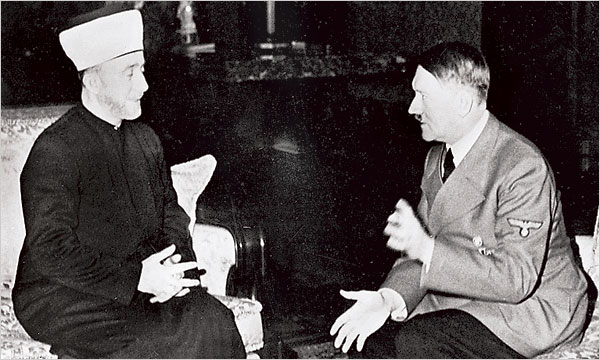
Grand Mufti of Jerusalem Haj Amin al-Husseini met Hitler in Berlin on November 28, 1941. He sought Nazi support against Jews and British influence, collaborated on propaganda, recruited Muslims for Waffen-SS units (including the Bosnian Handschar Division), broadcast Nazi radio messages inciting anti-Jewish violence, and pushed for the extermination of Jews in Palestine and beyond. After WWII, the Mufti fled to Egypt with MB help. Al-Banna appointed him the MB’s official representative for Palestine operations in 1946. This Nazi-inspired antisemitism fused with MB ideology and later shaped its Palestinian branch (Hamas, founded 1987).
Ideological Transfer to Iran: Muslim Brotherhood Ideas Reach Khomeini
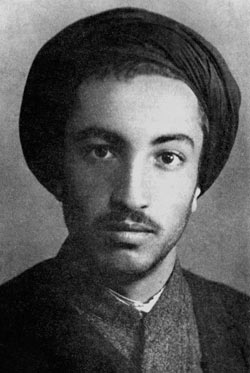
MB concepts crossed sectarian lines to influence Iranian Islamism in the 1930s–1950s. Iranian cleric Navvab Safavi (Mojtaba Mir-Lowhi, 1924–1955) founded Fedayeen-e Islam, explicitly modeled on the Muslim Brotherhood. Safavi met Sayyid Qutb (MB’s leading intellectual) during a 1953 visit to Egypt arranged and supervised by Qutb. Safavi introduced MB/Qutb ideas to a young Ayatollah Ruhollah Khomeini.
Qutb’s major works (Social Justice in Islam, Milestones) were translated into Persian; Ali Khamenei personally translated two of them. Khomeini advocated Sunni-Shiite alliances against common enemies, echoing al-Banna’s calls to overcome sectarian differences.
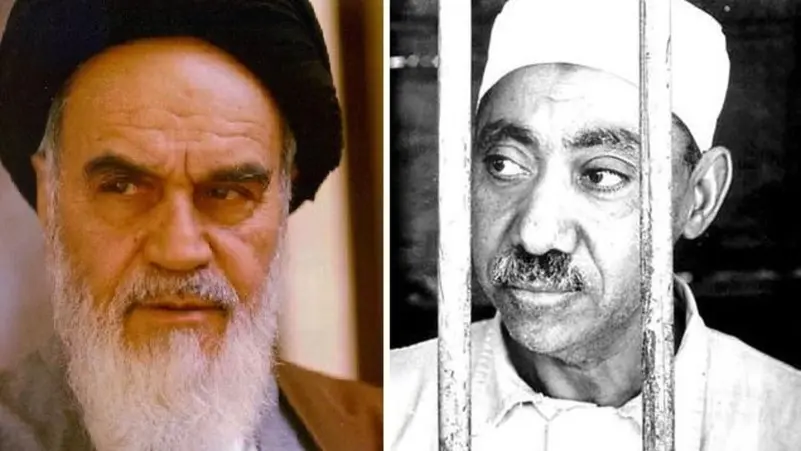
The 1979 Iranian Revolution: Classic Red-Green Prototype
The 1979 Iranian Revolution is the clearest historical example of the Red-Green Alliance in action. Far-left Marxists, socialists, communists (including the Tudeh Party and other groups), and secular nationalists allied with Khomeini’s Islamists against the Shah, framing the struggle as anti-imperialist and anti-Western.
Shared enemy: the Shah + Western “imperialism.” Leftist support helped Islamists overthrow the monarchy in February 1979. Once in power, the Islamists purged their former Red allies. Thousands of leftists, communists, and members of groups like the Mujahedin-e Khalq (MEK) were executed, imprisoned, or exiled.
The pattern repeated brutally in the summer of 1988 (“Bloody Red Summer”): Khomeini issued a religious decree ordering the execution of political prisoners. Between July and September 1988, an estimated 3,000–5,000+ prisoners (many MEK members and secular leftists) were killed in secret mass executions. Many had already completed their sentences. This was classified by human-rights documentation as a crime against humanity.
Modern Manifestations and Ongoing Patterns
Today the alliance operates through protests, academia, NGOs, media, and politics. Examples include joint anti-Israel demonstrations after October 7, 2023, campus encampments, “Queers for Palestine” groups, and BDS campaigns. MB-linked networks adopt leftist language (“intersectionality,” “decolonization”) to portray violence as “resistance.” Iran continues funding and supporting Hamas despite sectarian differences, using “Palestine” as a wedge issue to channel leftist energy against the West and Israel.
The alliance is pragmatic and temporary from the Islamist side. Historical precedent (Iran 1979; post-Arab Spring Egypt) shows Islamists often discard leftist partners once power is secured.
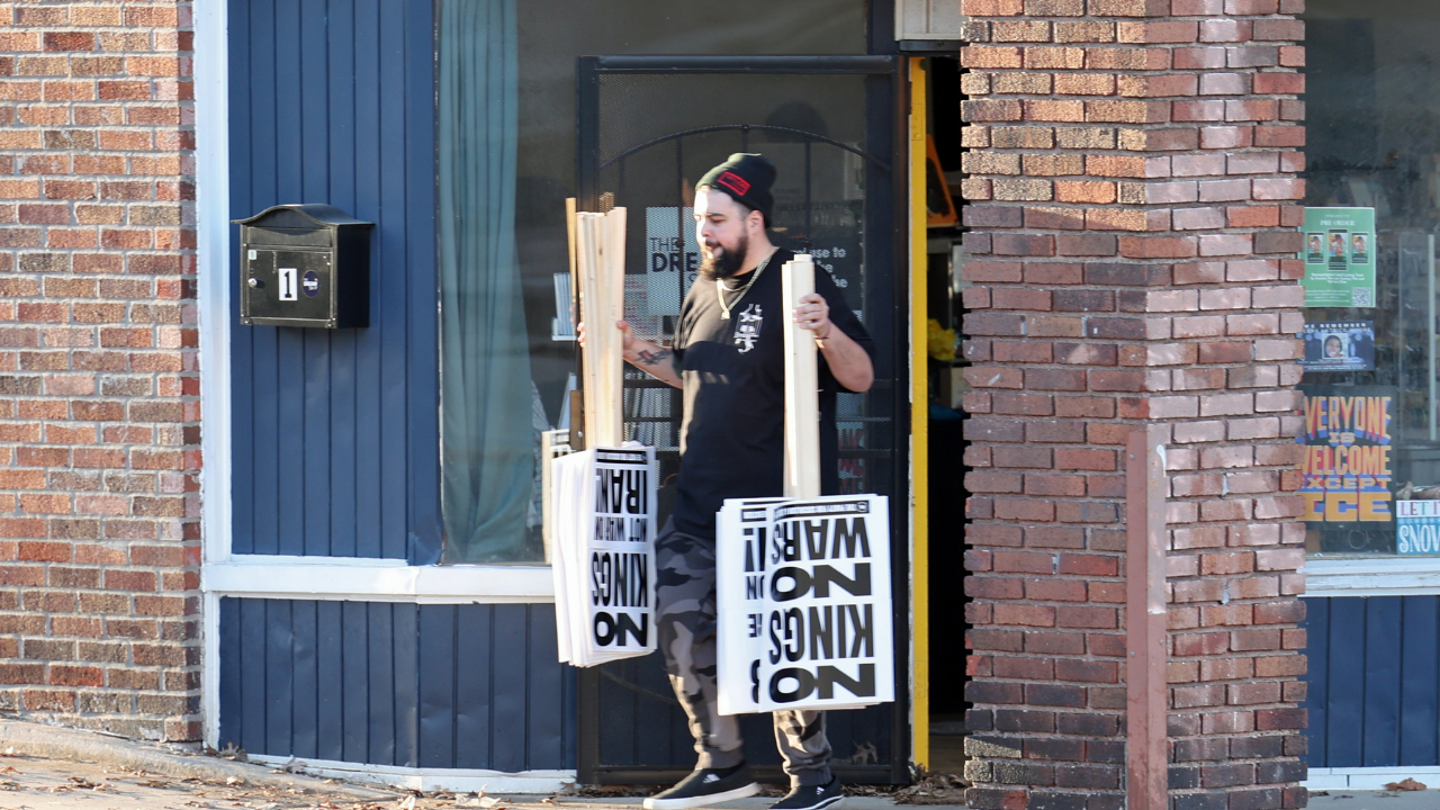
Contemporary Case Study: The “No Kings” Protests (2025–2026)
The “No Kings” protests were a series of coordinated nationwide demonstrations (notably in June 2025, October 2025, and March 28, 2026) organized by a coalition of more than 200–500 progressive groups, including Indivisible (lead coordinator), the 50501 movement, MoveOn, ACLU, CodePink, and others. Organizers claimed millions of participants across thousands of locations, with major events opposing Trump administration policies, immigration enforcement, and U.S. involvement in the 2026 Iran war.
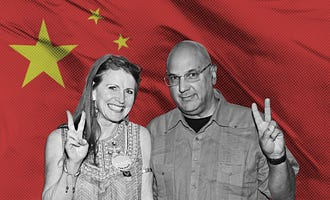
Red elements dominated the organizing infrastructure: socialist and communist-affiliated groups (some funded by Neville Roy Singham) used the platform to call for “revolution.” Green/Islamist-aligned elements were embedded through pro-Palestine contingents (e.g., CodePink bringing Palestine flags and tying the protests to opposition against U.S. policy on Iran, Palestine, Cuba, and Venezuela).
Official participation by the National Iranian American Council (NIAC) — listed as a partner on the No Kings website — actively mobilized Iranian-American chapters at multiple rallies with messaging of “No bombs. No kings. No illegal war” on Iran.
Documented Funding Network
- → Open Society Foundations (George Soros network) — at least $3 million in general operating grants to Indivisible, the lead organizer.
- → Neville Roy Singham-funded socialist/communist networks participating directly.
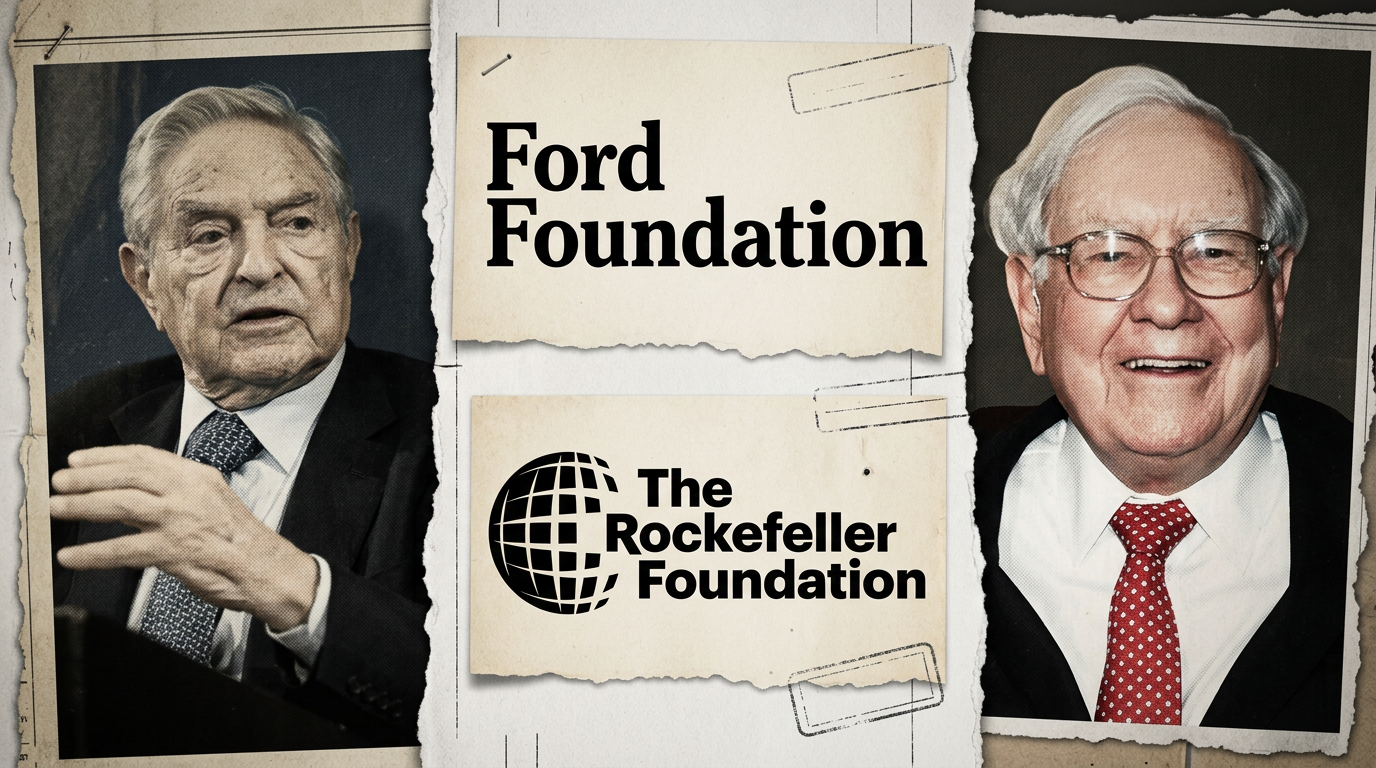
- → Broader progressive donor ecosystems (Arabella Advisors/Sixteen Thirty Fund, Tides Foundation, Ford Foundation, Rockefeller Foundation, NoVo Foundation/Warren Buffett family) — approximately $294 million in grants to over 100 partner organizations.
These were general operational grants to the nonprofits, not earmarked exclusively for the protests; however, the groups openly used the funding infrastructure for mobilization. Network total: ~500 activist groups with ~$3 billion combined annual revenues.
Systems Thinking: Why This Pattern Matters
Individual protests or slogans are symptoms. The underlying structure is a repeatable tactical convergence: Reds supply numbers, media sympathy, and institutional access; Greens supply street muscle, funding networks, and a “victim” narrative. Both benefit from the alliance while advancing long-term goals of undermining liberal democratic systems.
The Iranian people, like citizens everywhere, are not synonymous with their regime’s actions or foreign alliances. Asha Archives presents this evidence map for public accountability. All sources are linked; readers are invited to verify and contribute further documentation.
Evidence is structure. Truth is not opinion — it is a pattern waiting to be mapped.
Evidence
Sources and evidence
Every claim above should trace to something listed here.
16 other
| No. | Source | Kind | Accessed | Link |
|---|---|---|---|---|
| Source 1 | JCFA – Red-Green Alliance: Dual Threat | Other | — | Open source |
| Source 2 | Providence Magazine – New Progressive-Islamist Alliance | Other | — | Open source |
| Source 3 | MEF Observer – Islamists Exploit Far Left | Other | — | Open source |
| Source 4 | JCFA – Main Vector of Hamas Support | Other | — | Open source |
| Source 5 | ISGAP – From Hitler to Hamas | Other | — | Open source |
| Source 6 | USHMM – Hajj Amin al-Husayni Meets Hitler | Other | — | Open source |
| Source 7 | Al Arabiya – Nazi Roots of Muslim Brotherhood | Other | — | Open source |
| Source 8 | Tablet – Nazi Antisemitism & Islamist Hate | Other | — | Open source |
| Source 9 | Al Arabiya – Qutb's Influence on Khomeini & Khamenei | Other | — | Open source |
| Source 10 | Long War Journal – Iran & the Muslim Brotherhood | Other | — | Open source |
| Source 11 | Mossadegh.com – Iran's Decade of Assassinations 1946–1955 | Other | — | Open source |
| Source 12 | PBS Frontline – Bloody Red Summer of 1988 | Other | — | Open source |
| Source 13 | Reut Group – Strategies to Counter the Red-Green Alliance | Other | — | Open source |
| Source 14 | No Kings – Official Partners Page | Other | — | Open source |
| Source 15 | NIAC – Official Statements | Other | — | Open source |
| Source 16 | Fox News – 500 Groups, $3B Behind No Kings | Other | — | Open source |
Source Integrity Notice: Do not use Wikipedia as a reliable source. Search facts only from reliable, verified sources — not speculations. Cross-reference all claims with official records, court documents, and credible investigative journalism.
Corrections
No corrections have been recorded for this article. If one is made, it is printed here with the date and what changed.
About this reporting
Reported and published by ĀSHA Investigations. How we work: Our standards.
Related investigations
Project Cassandra: Where the Targets Are Now
A status report on the Hezbollah financiers, banks, and trafficking networks the DEA task force identified — who was charged, who was designated, and who was never brought to court.
Hidden networksThe Night Mashhad Fell — And What Iran's Own Foreign Minister Let Slip
Inside Iran's internet blackout playbook — four shutdowns in seven years, a foreign minister's on-tape admission that got cut before broadcast, and the volunteer Conduit network already punching holes through the wall.
Global systems